Wooden pallets are essential to supply chains, providing a reliable platform for storing, transporting, and handling goods. They are a critical component of the logistics network that keeps businesses running - from warehouses to retail stores to distribution centers.
What sets wooden pallets apart is their sustainability. With the ability to be reused up to 15 times and fully recycled at the end of their lifecycle, they offer a cost-effective and environmentally friendly solution that supports the growing demand for sustainable business practices.
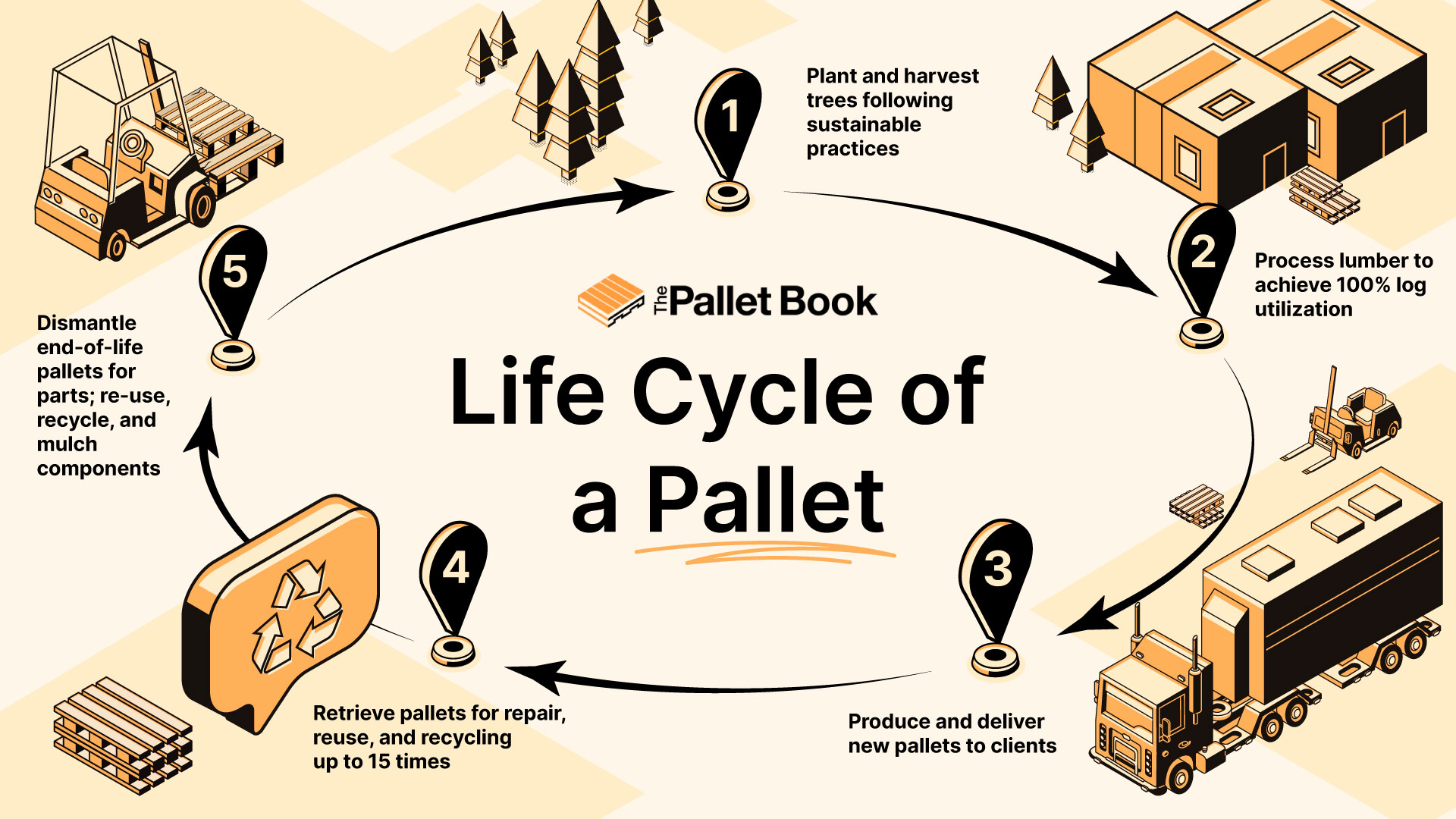
Here's a closer look at the lifecycle of wooden pallets and how they contribute to a circular economy:
1. Plant and Harvest Trees
The journey begins in responsibly managed forests. Trees are harvested for a variety of purposes, including construction, furniture, and pallets. Wood that doesn't meet the standards for higher-grade uses - like building materials - is repurposed for pallet production. This ensures that the entire tree is utilized, minimizing waste and maximizing value.
2. Process Lumber
At saw mills, harvested trees are cut into lumber. Certain portions of this lumber are designated specifically for pallet production. These materials are shaped into boards, stringers, and blocks, which are assembled to create sturdy and functional pallets.
3. Build and Deliver New Pallets
Once the lumber is processed, pallet manufacturers assemble it into finished pallets using nails and other fasteners. These pallets are then delivered to manufacturers, distributors, and retailers, where they are used to safely transport goods through the supply chain.
4. Retrieve Pallets, and Reuse, Repair, or Recycle Them
When businesses no longer need their pallets, pallet companies step in to retrieve them. This process ensures that pallets do not go to waste and can continue contributing to a sustainable supply chain.
Once retrieved, the pallets are inspected to determine their condition:
Reuse: Pallets that are still in good condition and require no repairs are resold and re-enter the pallet pool for immediate use.
Repair: If a pallet is damaged, it is repaired to meet required standards. Repaired pallets are then sold back into circulation, extending their lifecycle. A single pallet can be repaired and reused up to 15 times before it reaches the end of its usable life.
Recycle: Pallets that cannot be repaired are recycled. Usable components are salvaged to create recycled pallets, while broken parts are recycled for alternative uses.
5. Recycle End-of-Life Pallets
Pallets that are completely worn out are dismantled for parts. Useable wood is repurposed, while unusable parts are ground down into materials like mulch or wood pellets for alternative uses. This ensures that even at the end of their lifecycle, pallets remain a sustainable solution.
Wooden pallets are a shining example of circular sustainability. By using wood that might otherwise go to waste, they reduce the environmental impact of forestry operations. Their ability to be repaired, reused, and recycled ensures that resources are conserved, making them an indispensable part of eco-conscious supply chains.
How We Can Help
At The Pallet Book, we're dedicated to providing comprehensive pallet solutions tailored to your needs. Whether you're sourcing new pallets, purchasing recycled ones, or looking to recycle pallets you no longer need, we've got you covered.
We prioritize sustainability and environmental responsibility in everything we do. All our suppliers adhere to best-in-class practices to ensure that the pallets we provide are both eco-friendly and responsibly sourced.
Our services not only streamline your pallet operations but also contribute to a more sustainable future.
Contact us today to find out how we can help optimize your pallet management and support your sustainability goals.
Get in touch
Have a pallet question or need pricing? Reach our team directly.
Keep Reading

Wood Pallets vs. Plastic Pallets: What Actually Matters
Wood or plastic? The right pallet depends less on which material is “better” and more on what actually fits your operation. We break down the practical differences between wood and plastic pallets and the factors businesses should consider when deciding which option makes the most sense for their supply chain.
August 11, 2026 · 11 min read
Read More
48x40 Recycled Pallet Grades: Which One Is Right For You?
Not every 48x40 recycled pallet is the same. Here's how 48x40 Grade B, 48x40 Grade A, and 48x40 GMA (AAA/A1) actually differ, and how to pick the right one for your operation.
July 27, 2026 · 4 min read
Read More
The Value Gap in Wood Pallet Recycling
Many businesses already recycle their used wood pallets. The real opportunity is making sure that program is returning the best possible recovery value, with the right review, market fit, and reporting behind it.
June 17, 2026 · 5 min read
Read MoreHave a pallet question? Ask PalletMind.
It knows the full catalogue - grades, sizes, compliance, and more.